
Book Details
288
November 10, 2026
Width: 10 in.
Height: 10 in.
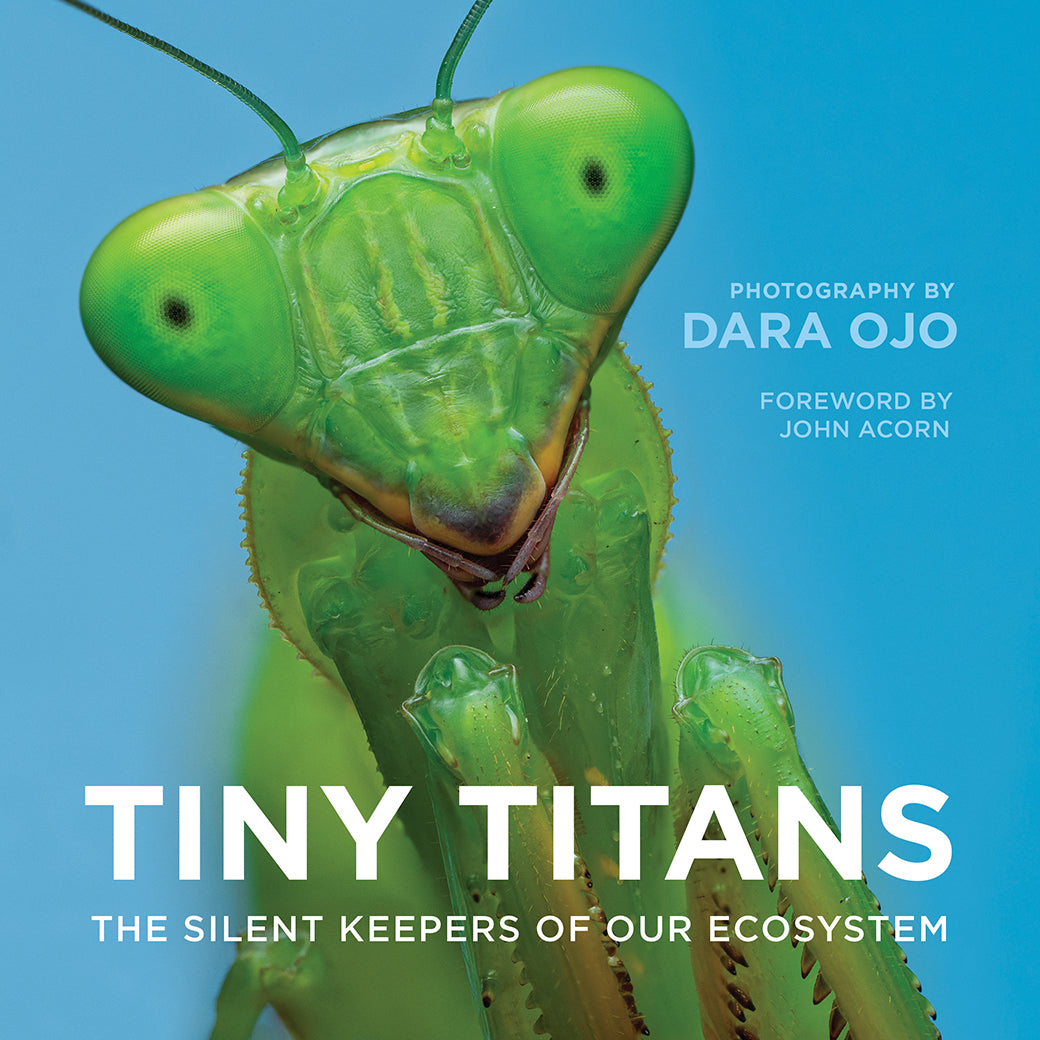
“As remarkable as arthropods are, they are often underappreciated despite their astonishing forms, intricate beauty, and amazing complexity. They are the most diverse organisms to ever exist, and they underpin the ecosystems that sustain humans and nearly all other life. Looking at them up close reveals their true depth and allows us to connect with them more meaningfully. Their well-being is inseparable from our own, a connection beautifully revealed in the remarkable images presented in Dara Ojo’s Tiny Titans: The Silent Keepers of Our Ecosystem.” —Gavin Svenson, director of the Museum of Natural History, University of Oxford
“Dara Ojo’s work invites us into a world many people pass by without seeing. Through extraordinary macro imagery, he reveals arthropods not as background creatures but as essential partners in the health of our landscapes. I was captivated at first glance and struck by the depth and beauty of each small creature who stared back at me. These photographs inspire curiosity, deepen understanding, and remind us conservation begins with noticing. When we learn to value and “see” even the smallest lives, we strengthen our love and commitment to protecting the ecosystems we all share.” —Dawn Carr, director of strategic conservation at the Nature Conservancy of Canada
“Arthropods represent the most speciose group of animals on the planet. Yet they are often overlooked by people in favour of charismatic flora and megafauna. Arthropods provide many ecosystem services such as pollination, biological control, decomposition, and nutrient cycling upon which other organisms, including humans, depend. In an age of human-mediated biodiversity decline, it’s important to learn all we can about arthropods and their diversity. A good place to start is by admiring their beauty in the amazing photographs in Dara Ojo’s Tiny Titans: The Silent Keepers of Our Ecosystem.” —Maya Evenden, professor of entomology, University of Alberta, and lead developer of the Massive Open Online Course, BUGS 101: Insect-Human Interactions